Tractography in Context: Multimodal Visualization of Probabilistic Tractograms in Anatomical Context
Sep 27, 2012· ,,,,·
1 min read
,,,,·
1 min read
Andreas Berres
Mathias Goldau
Marc Tittgemeyer
Gerik Scheuermann
Hans Hagen
Abstract
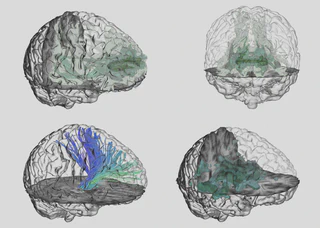
Multi-modal display of neurological data in anatomical context is a challenging issue in biomedical visualization. We present an application-driven approach, which solves the visibility issues arising from the simultaneous presentation of probabilistic tractograms and anatomical context. The tractogram (a scalar field indicating a connectivity score between voxels) is visualized by nested surface layers, providing an overview of long-range connectivity. Unique dataset features are reflected by value-based opacity and further enhanced by depth cues. An illustrative, three-dimensional rendering of the cortex complemented with textured slices is provided as anatomical context. The presented methods are based on a detailed requirements analysis with domain experts. Two user studies were performed to evaluate our methods and the techniques were improved based on their feedback. Our methods can be applied to a wide range of data, as they can be adapted to the range and requirements of data very easily.
Type
Publication
In VCBM 12: Eurographics Workshop on Visual Computing for Biology and Medicine